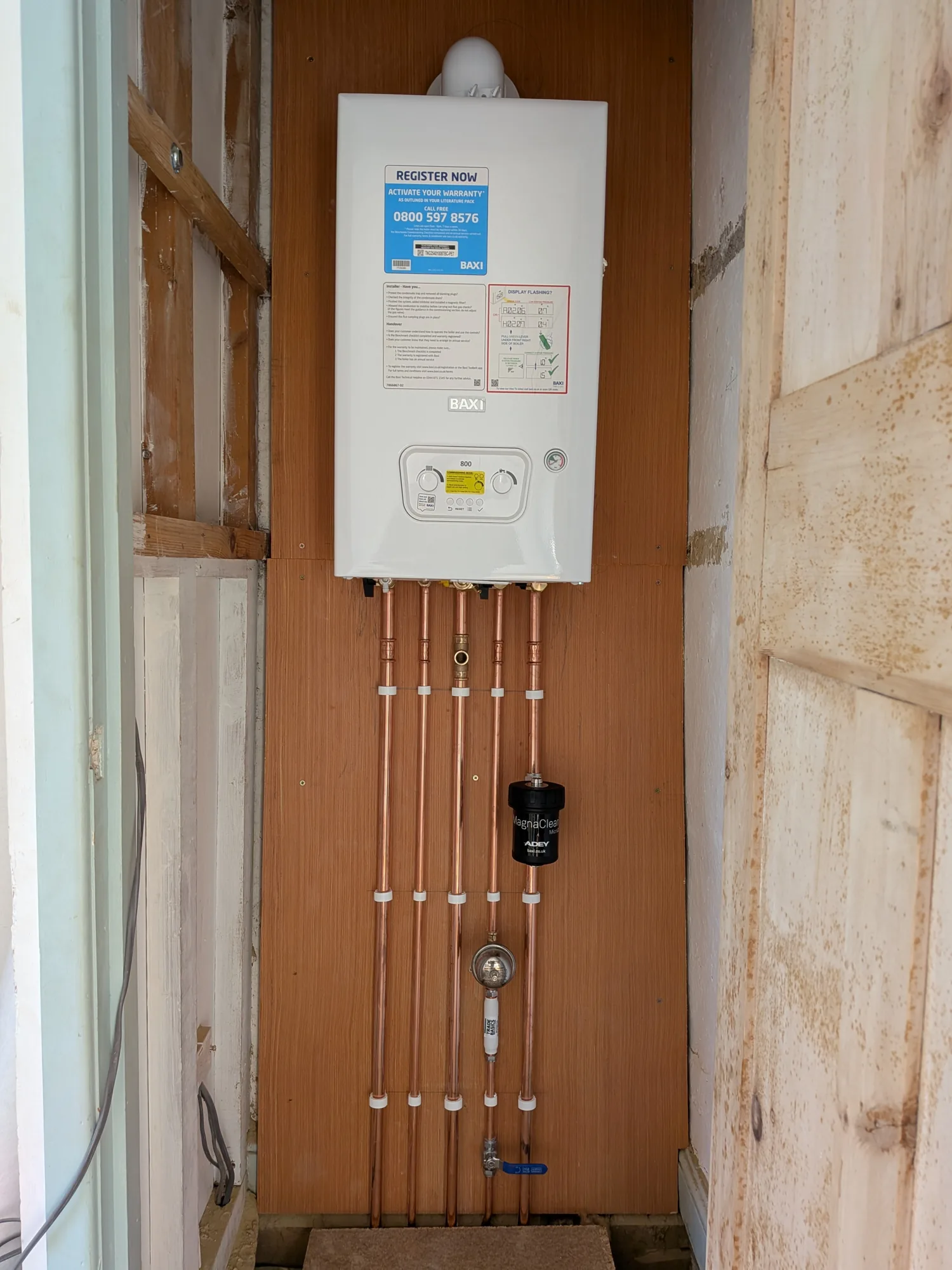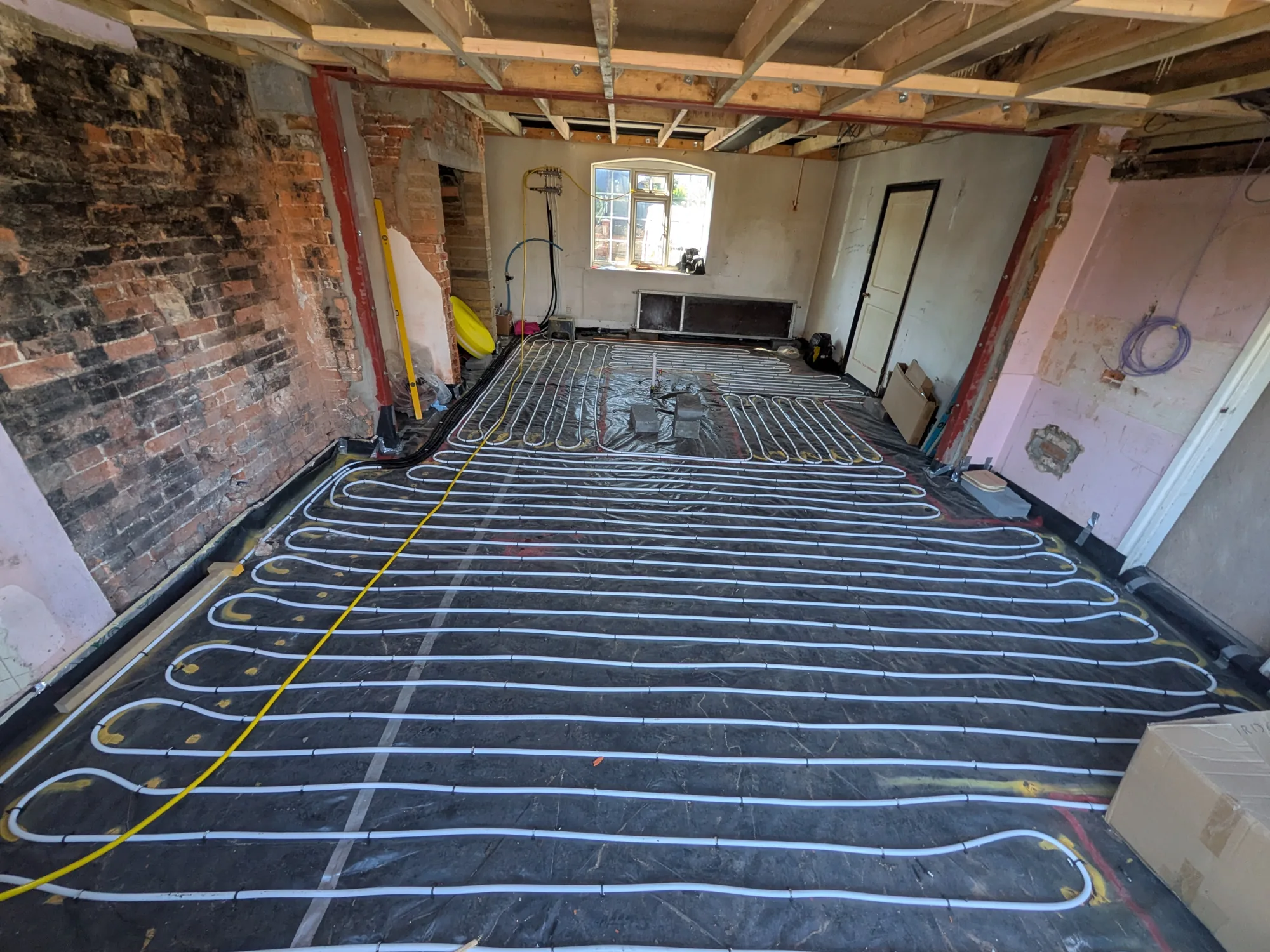
Wet underfloor heating circulates warm water through pipe loops under the floor, turning the whole floor into a gentle radiator. It gives even heat with no cold spots, frees up wall space, and runs at a lower temperature that suits modern boilers and heat pumps. It works best in extensions, renovations and new builds where the floor build-up can be planned. Loops should always be pressure-tested before the floor is laid.
Underfloor heating has gone from a luxury extra to a genuinely sensible choice for a lot of Norfolk homes, especially on extensions, renovations and new builds. Done properly, it gives a level of even, quiet comfort that radiators struggle to match, and it works beautifully with modern boilers and heat pumps. But it is not the right answer for every project. This guide walks through how it works, where it makes sense, and the things worth thinking about before you commit.
How Wet Underfloor Heating Works
A wet underfloor heating system circulates warm water through a network of pipe loops laid across the floor. Instead of heating from a few hot points on the wall, the whole floor becomes a gentle, low-temperature radiator.
- Pipe loops: Continuous runs of flexible pipe are clipped out across the floor in a set pattern, so heat is spread evenly right into the corners of the room.
- The manifold: Each loop connects back to a manifold, which acts as the hub of the system. It balances the flow to each zone and lets different areas be controlled separately.
- Low flow temperature: Because the heat is spread over such a large surface, the water only needs to be warm rather than hot. That gentle, steady output is what makes it so comfortable.
- The floor finish: The pipe is covered by screed or a suitable floor build-up, which stores and radiates the heat slowly and evenly into the room above.
The result is warmth that rises evenly from the floor, with no cold spots and no hot radiators on the walls to work around.
The Benefits of Underfloor Heating
There is a reason underfloor heating is on so many renovation wish lists. When the project suits it, the advantages are real.
- Even, comfortable heat: The whole floor warms the room gently, so you avoid the hot-then-cold feel of rooms heated by radiators alone.
- No radiators on the wall: That frees up wall space for furniture and gives you a cleaner, more flexible layout, which matters most in open-plan spaces.
- Efficient at low temperatures: Running at a lower flow temperature suits modern condensing boilers and pairs naturally with heat pumps, so it is a future-ready choice.
- Quiet and out of sight: Once the floor is down there is nothing to see or hear. No clicking radiators, no dust traps on the walls.
- Warm underfoot: A gently warm floor is one of those comforts you notice every day, particularly on tiled or stone finishes.
Is It Right for Your Project?
Underfloor heating shines in the right setting, but it is not automatically the best choice everywhere. Being honest about that upfront saves money and disappointment.
- Best for extensions and renovations: When the floor is already coming up, or being built from scratch, the pipe and insulation can be designed in from the start without tearing the room apart.
- Ideal for new builds: A blank canvas lets the whole system be sized and set out properly, and new builds are well insulated, which is exactly what underfloor heating likes.
- Trickier as a retrofit: Fitting it into an existing floor is possible, but it means raising floor levels or lifting finishes, so the practicality depends on the property.
- Insulation matters: Underfloor heating works best in a well-insulated space. In a draughty, poorly insulated room it has to work harder, which eats into the efficiency benefit.
We will always give you a straight answer on whether underfloor heating suits your project, or whether radiators, or a mix of both, would serve you better.
Planning an Extension or Renovation?
Call SRM Mechanical on 07745 036715. We design and install wet underfloor heating across Norwich, Great Yarmouth, Lowestoft and the wider Norfolk area, with free quotes and honest advice.
Call for a Free QuoteHow the Installation Works
A tidy, well-tested install is what separates underfloor heating that just works from a system that causes headaches down the line. Here is how a job runs.
- Design and layout: We plan the loop layout room by room, working out spacing and zoning so the heat is spread evenly and each area can be controlled the way you want.
- Setting out the pipe: The pipe is clipped down across insulation in the planned pattern, then run back to the manifold, with each zone kept to a sensible loop length for balanced flow.
- Manifold and controls: The manifold, actuators and controls are connected up, ready to link into your boiler or heat pump and your thermostats.
- Pressure testing: Before anything is covered over, every loop is pressure-tested and left under pressure. That way we can be certain there are no issues once the screed or floor goes down. It is the detail that saves a lot of grief later.
- Floor down and commissioning: Once the floor build-up is complete, the system is commissioned, balanced and set up so it runs efficiently from day one.
Getting the testing right before the floor is laid is not optional in our book. A leak found after screeding is a very different problem to one found before.
Running Costs and Controls
A common worry is that a warm floor must cost a fortune to run. In a well-insulated space with the right controls, the opposite is often true.
- Low temperature, steady output: Because it runs cooler than radiators and heats steadily, underfloor heating can be very efficient, particularly in a well-insulated room.
- Zoned control: Each zone connects back to the manifold with its own controls, so you only heat the rooms you are using, to the temperature you want.
- Smart thermostats: Programmable and smart controls let you schedule heating around your day and take advantage of the system's slow, even response.
- Heat pump ready: The low flow temperature is exactly what a heat pump wants, so if you move to a heat pump in future, an underfloor system is already a good match.
The key to low running costs is a system that is sized and set up properly, in a space that holds its heat. Get those right and underfloor heating is a comfortable, efficient way to heat a home.
Frequently Asked Questions
Not necessarily. Because it runs at a lower temperature and heats a room evenly, a well-designed wet underfloor system in a well-insulated space can be very efficient. The running cost comes down to how well the room holds its heat and how sensibly the controls are set, both of which we plan for at the design stage.
Often, yes, particularly as part of a renovation or extension where the floor is coming up anyway. It usually means adjusting floor levels or lifting the existing finish, so the practicality depends on the property. We will assess the floor build-up and tell you honestly whether it is the right choice for your project.
Yes. Wet underfloor heating works well with a modern condensing boiler, and because it runs at a lower flow temperature it is also an excellent match for a heat pump if you move to one later. We set the system up to work efficiently with whatever heat source you have.
Always. Every loop is pressure-tested and left under pressure before any screed or floor covering goes down, so we can be certain there are no leaks once everything is covered over. It is a step we never skip, because a problem found before the floor is laid is far easier to sort than one found after.